
September is peak hurricane season in Florida. It is also Florida Preparedness Month, recognized by Governor Ron DeSantis as a reminder to review emergency plans, restock supplies, and know where to go if a storm threatens.
For seniors, individuals with disabilities, and caregivers in Tampa, Wesley Chapel, Brandon, and St. Pete, hurricane planning involves more than batteries and bottled water.
You also need a medical transportation plan.
Let’s say you have dialysis on Tuesday. Or chemotherapy on Thursday. Or a post-surgery appointment that cannot simply be pushed back for weeks. What happens if your clinic closes, roads flood, or your usual ride is unavailable?
What do you do? Hitchhike to the clinic? Hope a rideshare driver has a working GPS and a heroic attitude?
A safer approach is to prepare early.
Why hurricane season can disrupt medical transportation
A hurricane or tropical storm can affect medical appointments in several ways:
- Clinics may close or change hours.
- Hospitals may limit services to emergencies.
- Appointments may be moved to another day or facility.
- Flooded roads, downed trees, and power outages can make travel unsafe.
- Transportation providers may temporarily pause service during dangerous conditions.
- Medical facilities may reopen before every surrounding road is safe to travel.
Non-emergency medical transportation (NEMT) is designed to help you reach medical appointments safely. It is not an emergency response service.
If you are having chest pain, severe trouble breathing, uncontrolled bleeding, or another life-threatening emergency, call 911. Do not wait for an NEMT vehicle.
Start with the Florida Special Needs Registry
The Florida Special Needs Registry helps local emergency management officials plan for residents who may need assistance during an evacuation or disaster.
It may be especially important if you:
- Use oxygen or other electrical medical equipment
- Need assistance with mobility or daily activities
- Use a wheelchair, walker, or stretcher
- Receive dialysis or other regular treatments
- Have a cognitive, physical, sensory, or medical condition
- Do not have a reliable way to evacuate independently
How to register
- Visit the Florida Special Needs Registry.
- Create an account and select your county.
- Provide detailed information about your medical and mobility needs.
- Indicate whether you need transportation assistance.
- Add an emergency contact and accurate phone numbers.
- Review and update the information when your health, equipment, address, or caregiver situation changes.
You can also contact your county emergency management office or ask a home health agency, physician’s office, oxygen provider, or private care provider for help.
Here are useful local contacts:
| Area | Registration and emergency planning contact |
|---|---|
| Tampa and Brandon , Hillsborough County | Florida Department of Health Special Needs Line: 813-307-8063 |
| Wesley Chapel , Pasco County | Pasco County Emergency Management: 727-847-8137 |
| St. Pete , Pinellas County | Pinellas County Emergency Management: 727-464-3800 |
Registration is a planning tool. It is not a guarantee of transportation, shelter space, or a particular service. Hillsborough County notes that registration efforts stop once evacuation operations begin. Pasco County advises that new applications stop five days before a hurricane or tropical storm.
That is why registering today is much better than registering while the wind is already howling.
Preparedness Box: Register before a storm is approaching. Keep your county’s phone number, your medical provider’s number, and your transportation provider’s number in both your phone and a printed emergency folder.
Make a plan for dialysis, chemotherapy, and other critical appointments
Some appointments are more time-sensitive than others. Dialysis, chemotherapy, infusion treatments, radiation, wound care, and certain post-operative visits may require careful coordination.
Before the storm
Call your medical provider as soon as a storm may affect the Tampa Bay area. Ask:
- Is the clinic expected to remain open?
- Could the appointment be moved earlier?
- Is there an alternate treatment location?
- What should you do if the facility closes?
- How will the clinic notify you about schedule changes?
- Who should you call after hours?
For dialysis patients, contact the dialysis center directly. Do not change or skip treatment based on general storm advice. Your care team should tell you what to do.
For chemotherapy or infusion patients, ask your oncology team whether your appointment can safely be rescheduled or transferred. Some visits may be adjusted. Others may not. The answer depends on your treatment plan.
Also arrange transportation early. When you book an NEMT ride, provide:
- Your exact pickup address
- The correct entrance or drop-off location
- Your appointment time
- Whether you use a wheelchair, stretcher, walker, or oxygen
- Whether a caregiver will ride with you
- The latest acceptable arrival time
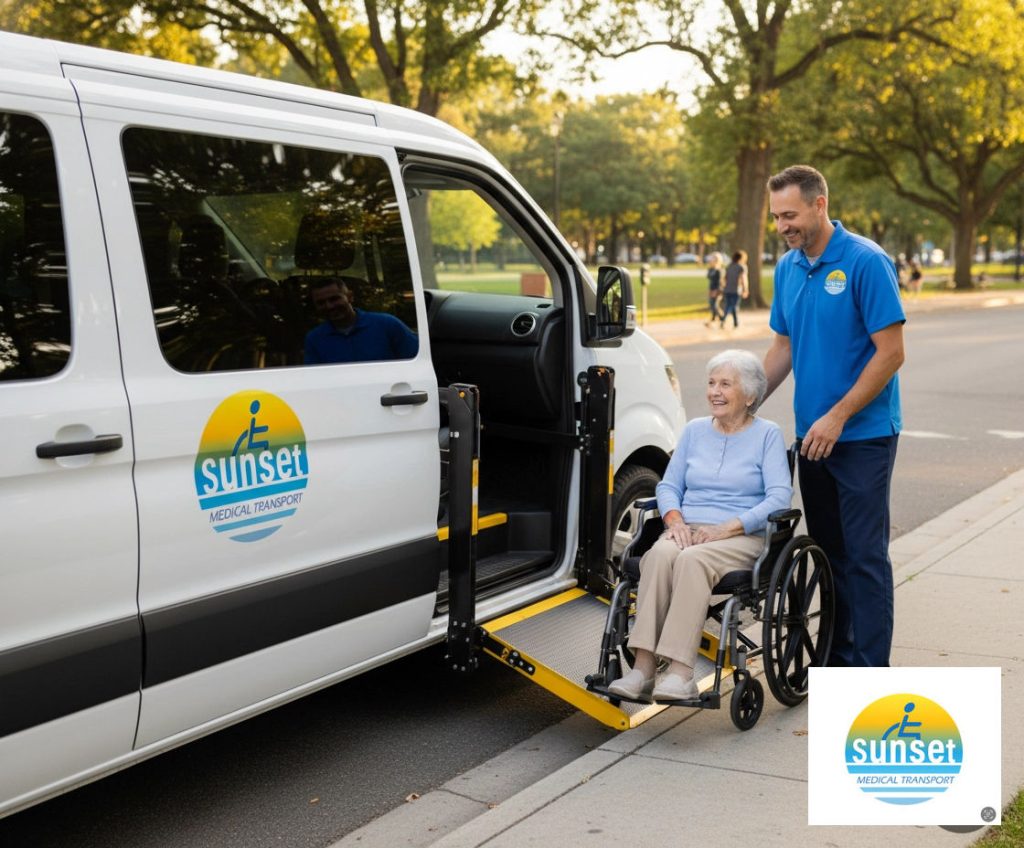
Sunset Medical Transport provides door-to-door medical transportation in Tampa Bay for wheelchair and ambulatory passengers, including rides to recurring appointments such as dialysis, therapy, checkups, and treatments.
During the storm
Your safety comes first.
If officials issue an evacuation order, follow local instructions. Do not attempt to travel through flooded roads, around barricades, or during dangerous wind conditions just to keep a routine appointment.
A responsible NEMT provider may delay or suspend trips when conditions put passengers and drivers at risk. That is not a lack of commitment. It is good safety planning.
If your appointment is urgent but not life-threatening, call your clinic and transportation provider for instructions. If you experience a medical emergency, call 911.
After the storm
Do not assume that a sunny morning means every road is safe.
Before leaving home:
- Confirm that your medical facility is open.
- Confirm that your appointment is still scheduled.
- Ask whether the facility is using a different entrance.
- Check for local road closures and flooding.
- Confirm your ride with your NEMT provider.
- Allow extra travel time.
NEMT providers like Sunset Medical Transport can begin reviewing routes, vehicle readiness, facility status, and road conditions as operations resume. Once roads reopen and travel is safe, the goal is to help patients reconnect with their appointments without adding more stress.
What to pack for a medical transport ride
Pack one easy-to-carry medical go-bag. You may need it for the ride, the appointment, an unexpected delay, or a shelter stay.
Medical essentials
- All medications and diabetic supplies
- A current medication list with doses and instructions
- Written care instructions
- Insurance cards and photo identification
- Physician, dialysis, oncology, and pharmacy contact information
- Oxygen equipment or other medically necessary equipment
- Chargers, backup batteries, and power cords
- Wound-care supplies
- Mobility equipment, such as a cane, walker, or wheelchair
Comfort and personal items
- Water and medically appropriate snacks
- A change of clothing
- Light jacket or sweater
- Small blanket or positioning cushion
- Personal hygiene items
- Adult briefs or other continence supplies
- Phone and portable charger
- Emergency contact information
- Service animal supplies, if applicable
Keep documents in a waterproof folder or sealed plastic bag. If you use oxygen, contact your supplier about backup equipment and emergency delivery procedures.
Family hurricane preparedness checklist
Use this checklist during Florida Preparedness Month.
Medical appointment checklist
- Call each doctor, clinic, dialysis center, or oncology provider.
- Ask about closures, early appointments, and alternate locations.
- Confirm how the provider will communicate changes.
- Schedule NEMT rides as early as possible.
- Share wheelchair, stretcher, oxygen, and caregiver needs.
- Confirm pickup and return-trip details.
- Write down backup transportation contacts.
Emergency planning checklist
- Register with the Florida Special Needs Registry.
- Update your county registration annually or whenever your needs change.
- Know your evacuation zone and nearest appropriate shelter.
- Tell your home health agency, hospice provider, or assisted living facility where you will be.
- Ask your power company about registration for electric-dependent medical equipment.
- Keep at least 72 hours of supplies available. If your medical needs are complex, prepare for longer.
- Identify two people who can check on you.
- Keep important phone numbers on paper in case the power or internet goes out.
A quick reminder about special needs shelters
Special needs shelters can support people who require medical observation, oxygen, generator power, or assistance from medical professionals. They are not hospitals and do not provide one-to-one bedside nursing care.
If you plan to use one, bring your medications, equipment, care instructions, personal supplies, and, when possible, a caregiver who knows your needs. Hillsborough County provides more information about eligibility and transportation on its Special Needs Disaster Assistance page.
How Sunset Medical Transport prepares for storms
Sunset Medical Transport focuses on safe, dependable, non-emergency rides for seniors, people with disabilities, and patients who need wheelchair or ambulatory assistance.
During hurricane season, safe transportation requires flexibility. That may include:
- Reviewing scheduled trips and appointment times
- Communicating with patients, caregivers, and medical facilities
- Checking road conditions and facility access
- Inspecting and preparing vehicles
- Adjusting routes when roads reopen
- Rescheduling trips that cannot be completed safely
Our clean, modern fleet and trained drivers are prepared to support patients with dignity and respect. Still, no transportation provider can safely operate through every storm condition. Trips may be delayed, changed, or paused when weather, flooding, evacuation orders, or road conditions make travel unsafe.
Payment and coverage information
Sunset Medical Transport is a private provider and does NOT accept Medicaid.
Our primary payment and coverage options include:
- Private pay
- Private insurance, when transportation is covered
- Workers’ compensation
Always check with your insurance provider, workers’ compensation representative, or care coordinator before scheduling if you expect coverage. Ask whether authorization, documentation, or a specific transportation arrangement is required.
Frequently Asked Questions
Does Sunset Medical Transport operate during a hurricane?
Sunset Medical Transport prioritizes passenger and driver safety. Trips may continue when conditions are safe, but service can be delayed or paused during dangerous weather, flooding, evacuation orders, or unsafe road conditions. Call ahead and confirm your ride.
Can Sunset take me to a special needs shelter?
Sunset Medical Transport provides private non-emergency transportation. Transportation to an official special needs shelter during an evacuation is coordinated through county emergency management. Register with the Florida Special Needs Registry and indicate that you need transportation.
Does Sunset accept Medicaid?
No. Sunset Medical Transport is a private provider and does not accept Medicaid. We focus on private pay, insurance, and workers’ compensation.
Can I schedule recurring transportation for dialysis or chemotherapy?
Yes. Recurring medical transportation can be scheduled in advance. Contact your clinic and Sunset Medical Transport early if a storm may affect your regular schedule.
What if my appointment is canceled after I book transportation?
Call both the medical facility and Sunset Medical Transport as soon as possible. During a storm, schedules can change quickly. Clear communication helps everyone adjust safely.
Is NEMT the same as an ambulance?
No. NEMT is for non-emergency medical appointments and transportation needs. It is not for life-threatening emergencies. If you need immediate medical help, call 911.
September is a good time to make the plan: not the day a hurricane is approaching. Register for emergency assistance, contact your medical providers, prepare your go-bag, and arrange transportation early.
Your appointments matter. Your safety matters more. With a little preparation, you and your family can face hurricane season with a clearer plan and fewer last-minute surprises.